
What is a C1D1 Booth?
A “C1D1” room is a building code requirement that was established by the National Fire Protection Association. It also incorporates NEC standards, which is essentially a set of standards that determine wiring, electrical components, and other safety features. This is something that can be built or purchased as a pre-engineered unit. Regardless of the direction you decide to go, it is important to check with your local AHJ to ensure compliance.
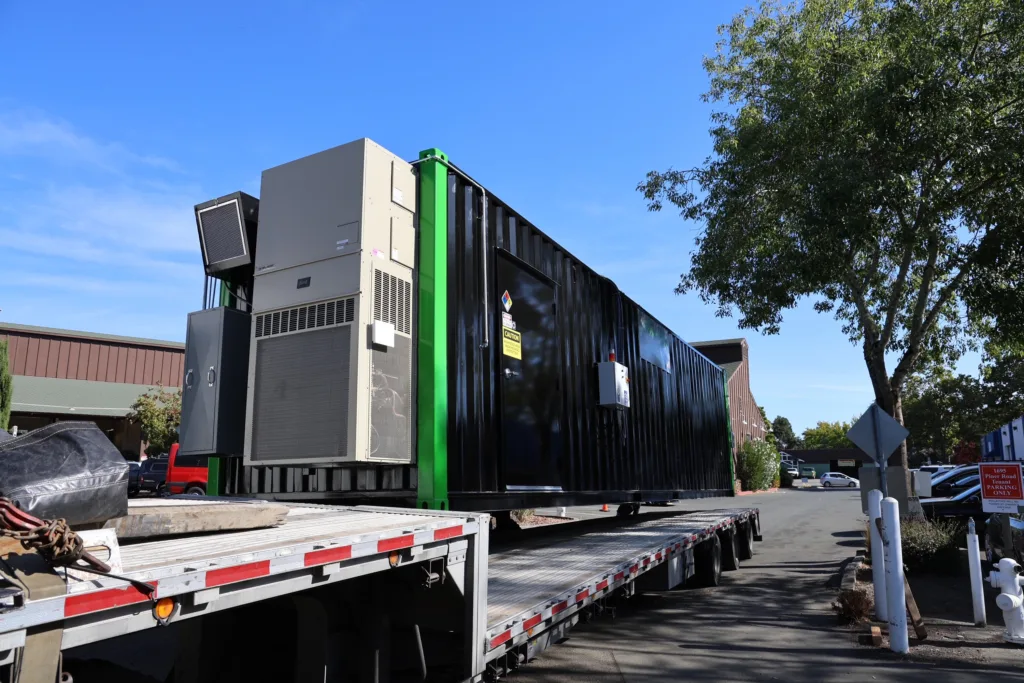
Why is a C1D1 Booth needed?
Picture this: you’re working in an environment where flammable or combustible materials are part of the daily grind. In these environments, it is of vital importance to have a room that is guaranteed to keep you safe and healthy while making your extracts. A quality C1D1 room will be made of all C1D1 components, provide adequate airflow at base operations and in a purge situation. These labs are specifically designed to handle processes or materials that pose a risk of fire or explosion.
What Components need to be C1D1?
Lighting: All lighting within the room needs to be C1D1, if it is outside of the C1D1 boundary, these can be C1D2.
Motors: if within the C1D1 boundary, these need to be C1D1 rated.
Gas detectors: if within the C1D1 boundary, these need to be C1D1 rated.
Purge buttons: All emergency purge buttons need to be C1D1 rated.
All the above components need to be verified and installed correctly to ensure the explosion proof rating is applicable after installation as well. If one of these is improperly wired or faulty, they can result in an explosion. A single spark from an electrical device, a hot surface, or even static electricity could ignite these materials, leading to catastrophic consequences. Make sure that your C1D1 booth complies with all local and national codes prior to anchoring it down!
Where are C1D1 regulations applicable?
Where are C1D1 regulations applicable?
C1D1 regulations are applicable in a wide array of industries including paint booths, cannabis processing, solvent storage, blast resistant buildings, oil & gas, battery storage, lithium production, and more. Essentially, ANY industry that uses large amounts of a solvent including butane, ethanol, C02, can utilize a C1D1 lab.
NFPA 70 NEC Hazardous Locations Classes, Divisions and Groups | ||
Class | Division | Group |
I – Flammable gases or vapors may be present | 1 – Ignitable concentrations of hazards exist under normal operation conditions and/or where the hazard is caused by frequent maintenance or repair work or frequent equipment failure | Group A – Acetylene |
II – Combustible dust may be present | 1 – Ignitable concentrations of hazards exist under normal operation conditions and/or where the hazard is caused by frequent maintenance or repair work or frequent equipment failure | E – Combustible metal dusts: aluminum, commercial alloys and magnesium |
III – Easily ignitable fibers or flyings may be present | 1 – Ignitable concentrations of hazards exist under normal operation conditions and/or where the hazard is caused by frequent maintenance or repair work or frequent equipment failure | Not Applicable |
Where can I Find More Detailed Classification info?
Where can I Find Detailed Classification info?
NFPA 70 outlines the specifications of the class and division guidelines. https://www.grainger.com/know-how/safety-health/quick-tips/kh-hazardous-locations-124-qt.
This provides a breakdown on the exact differences between C1D1/C1D2 and what makes each of these zones distinct from the other.
Check out our other blog posts for new exciting content DAILY!